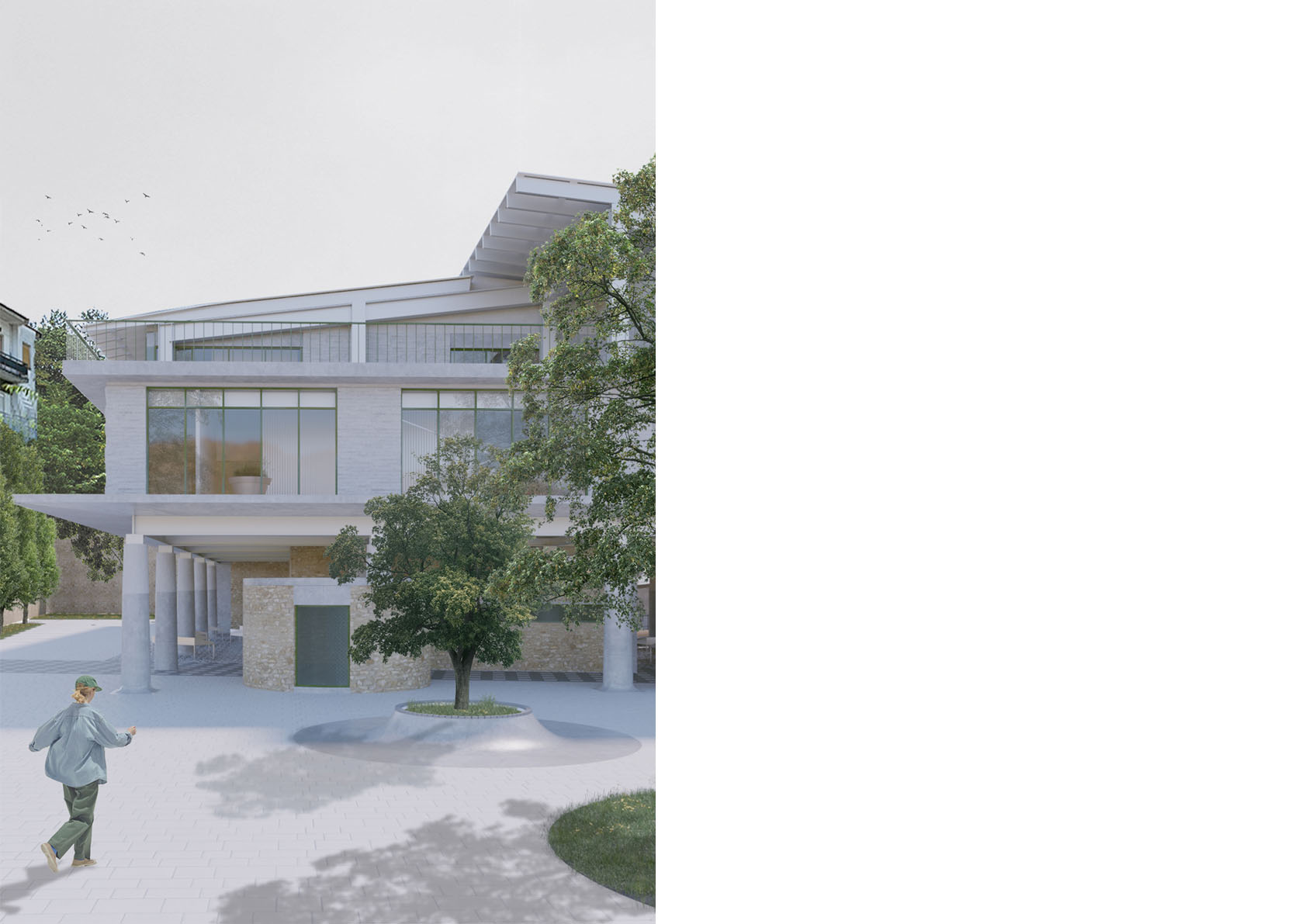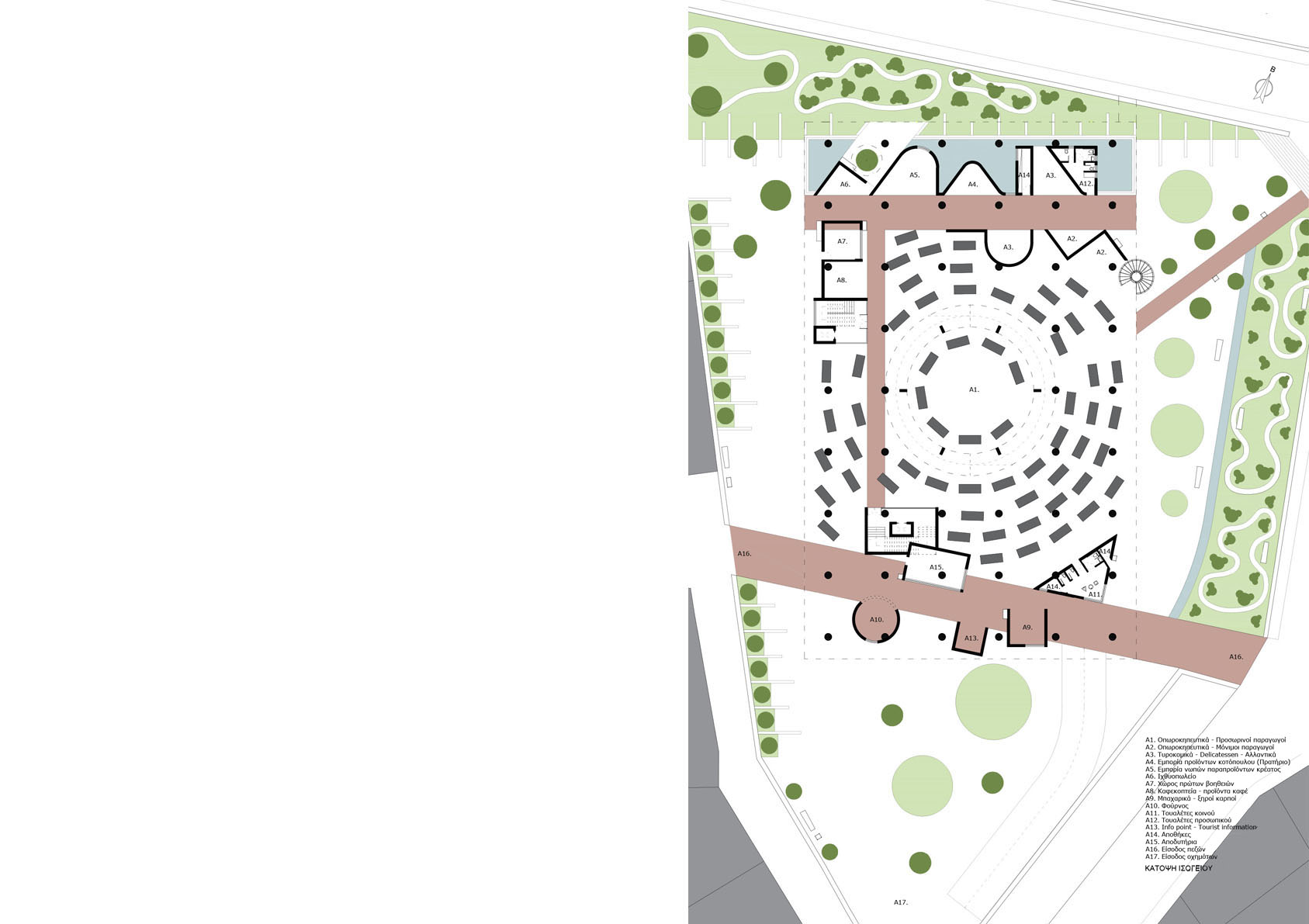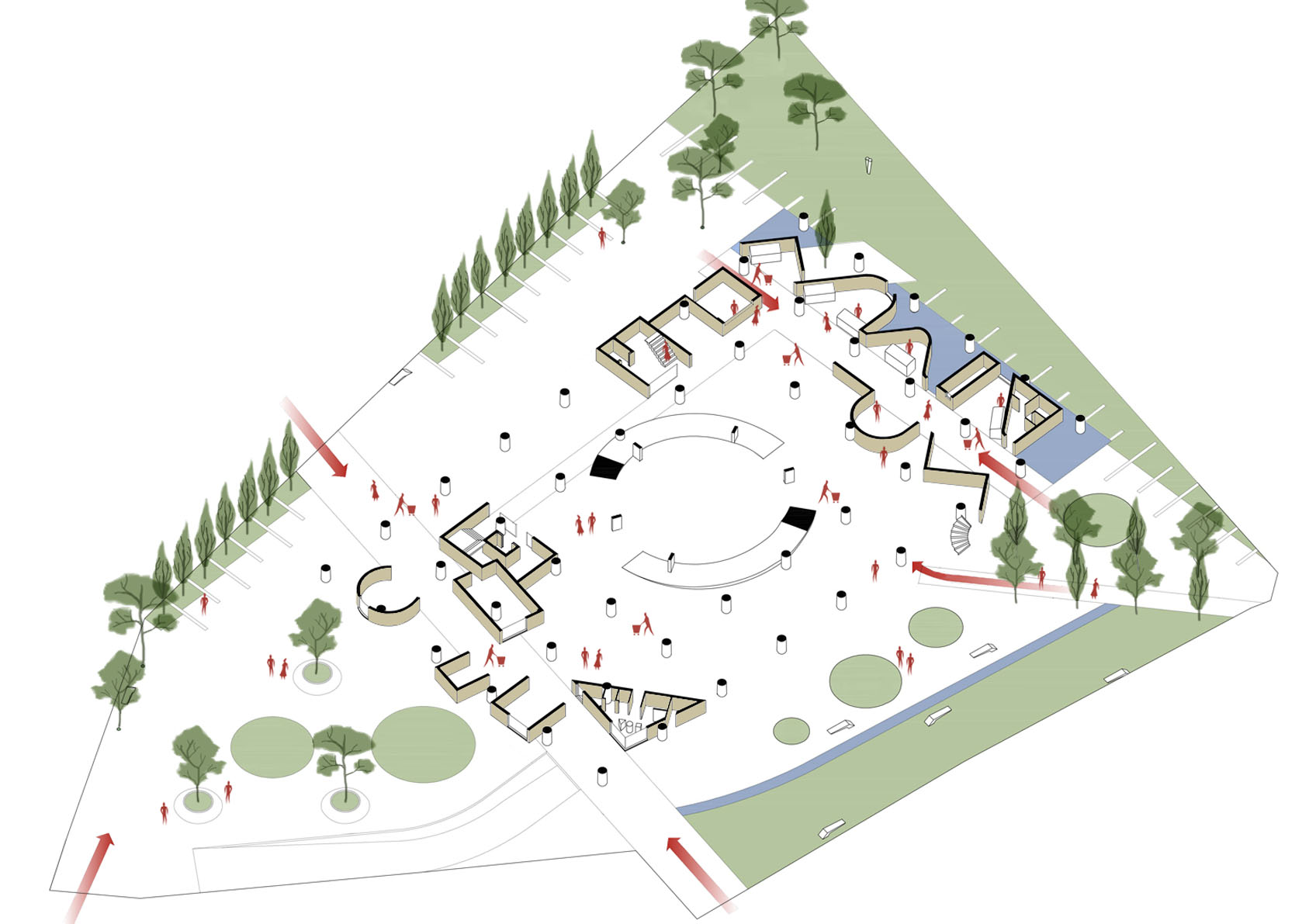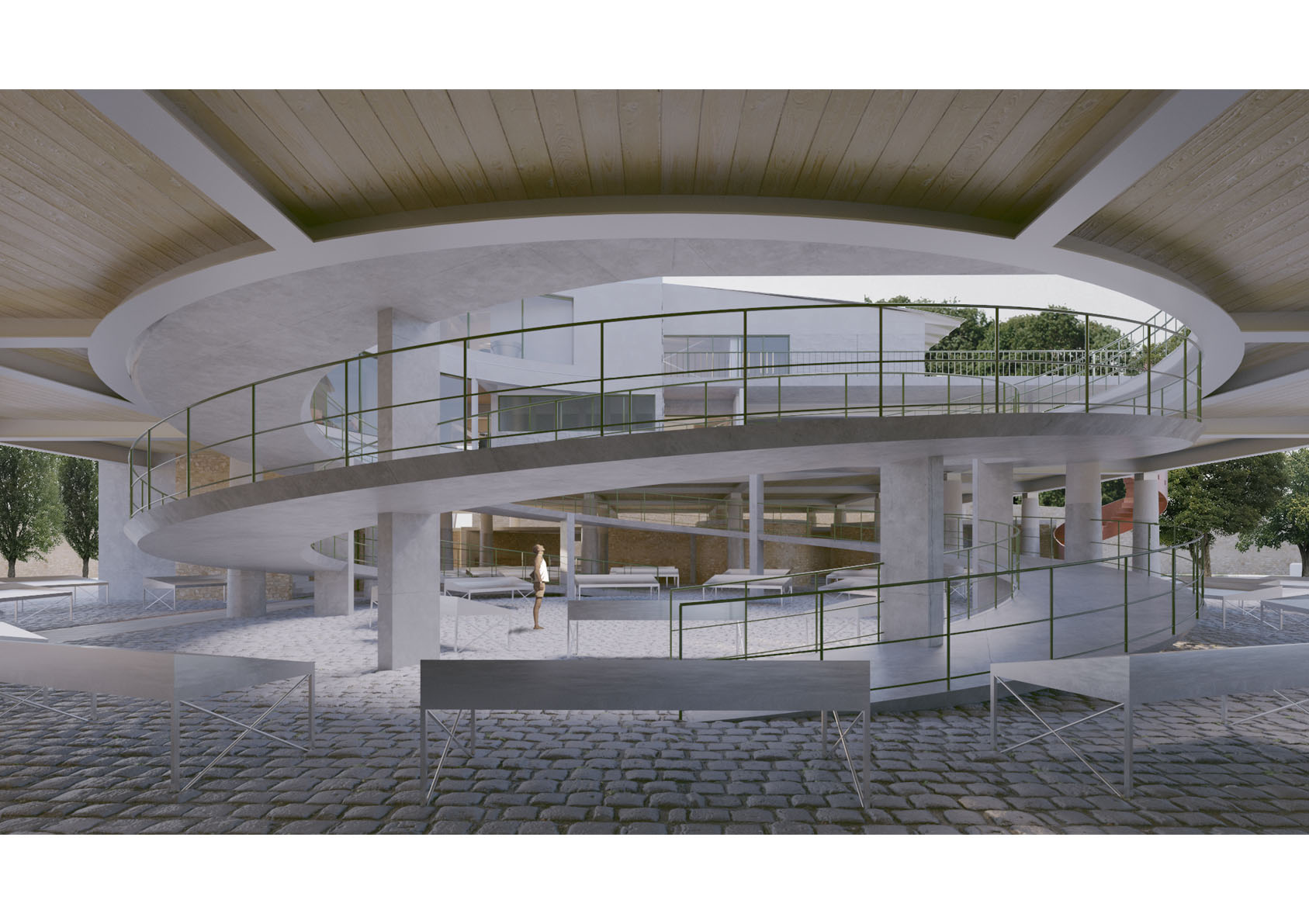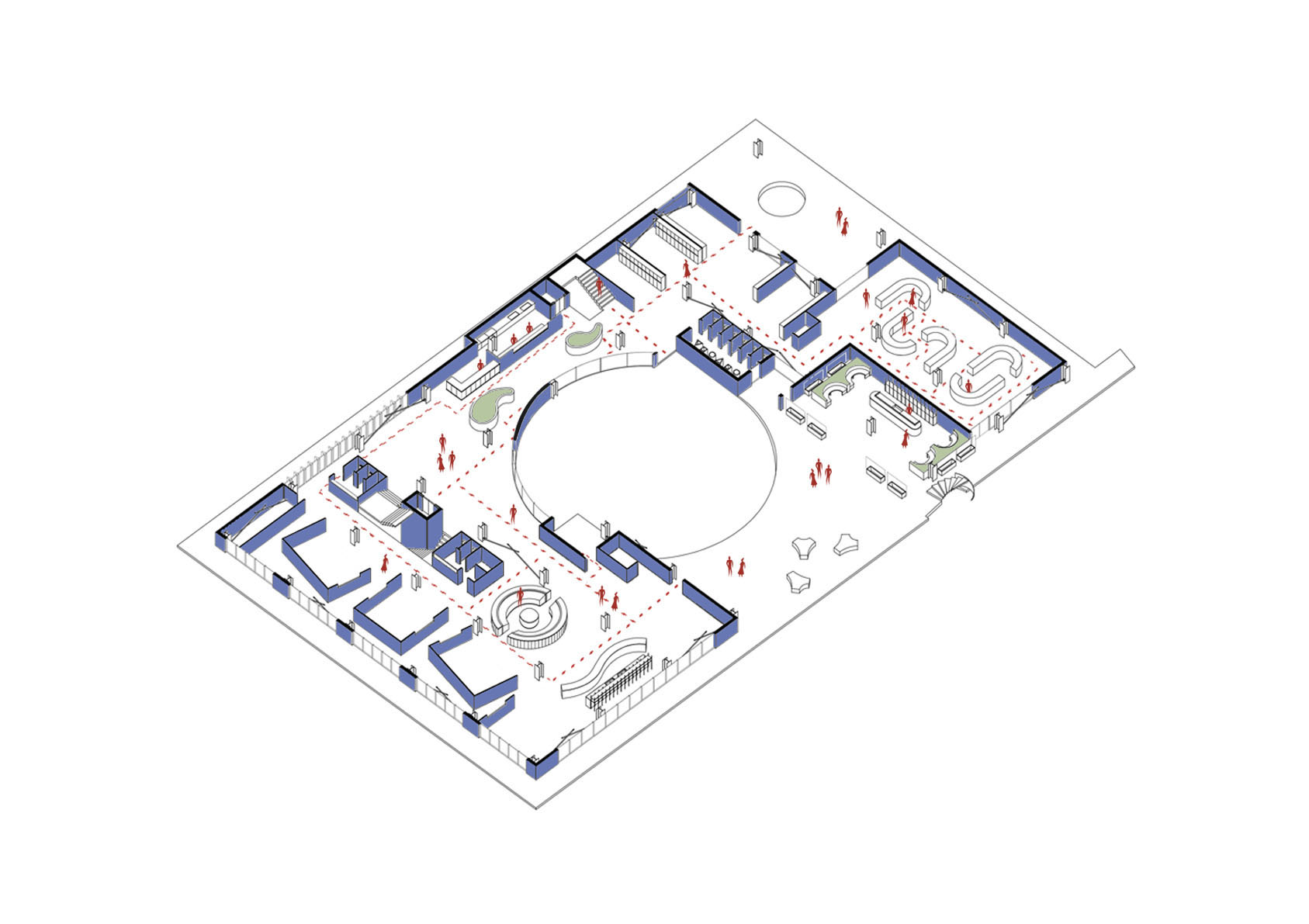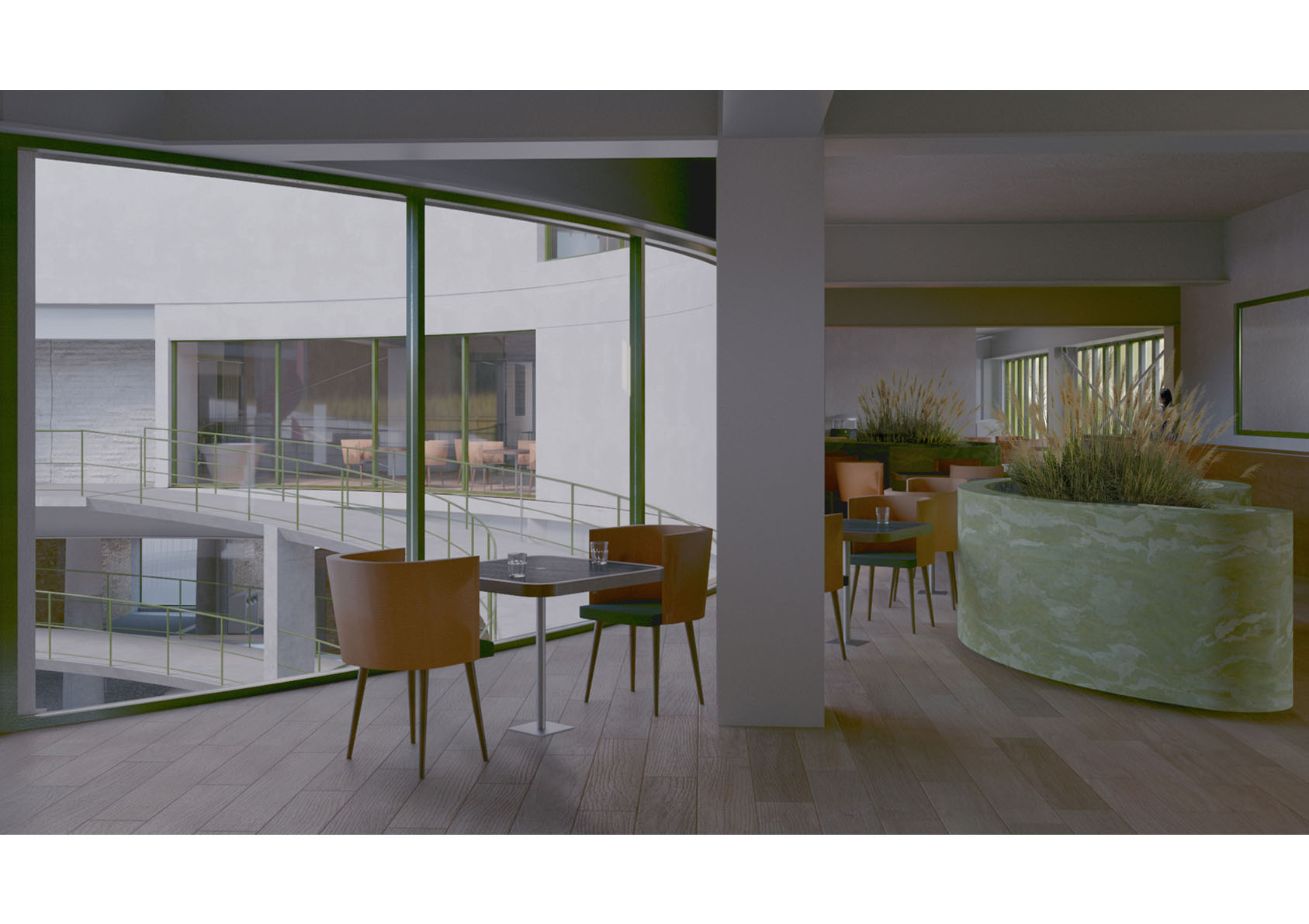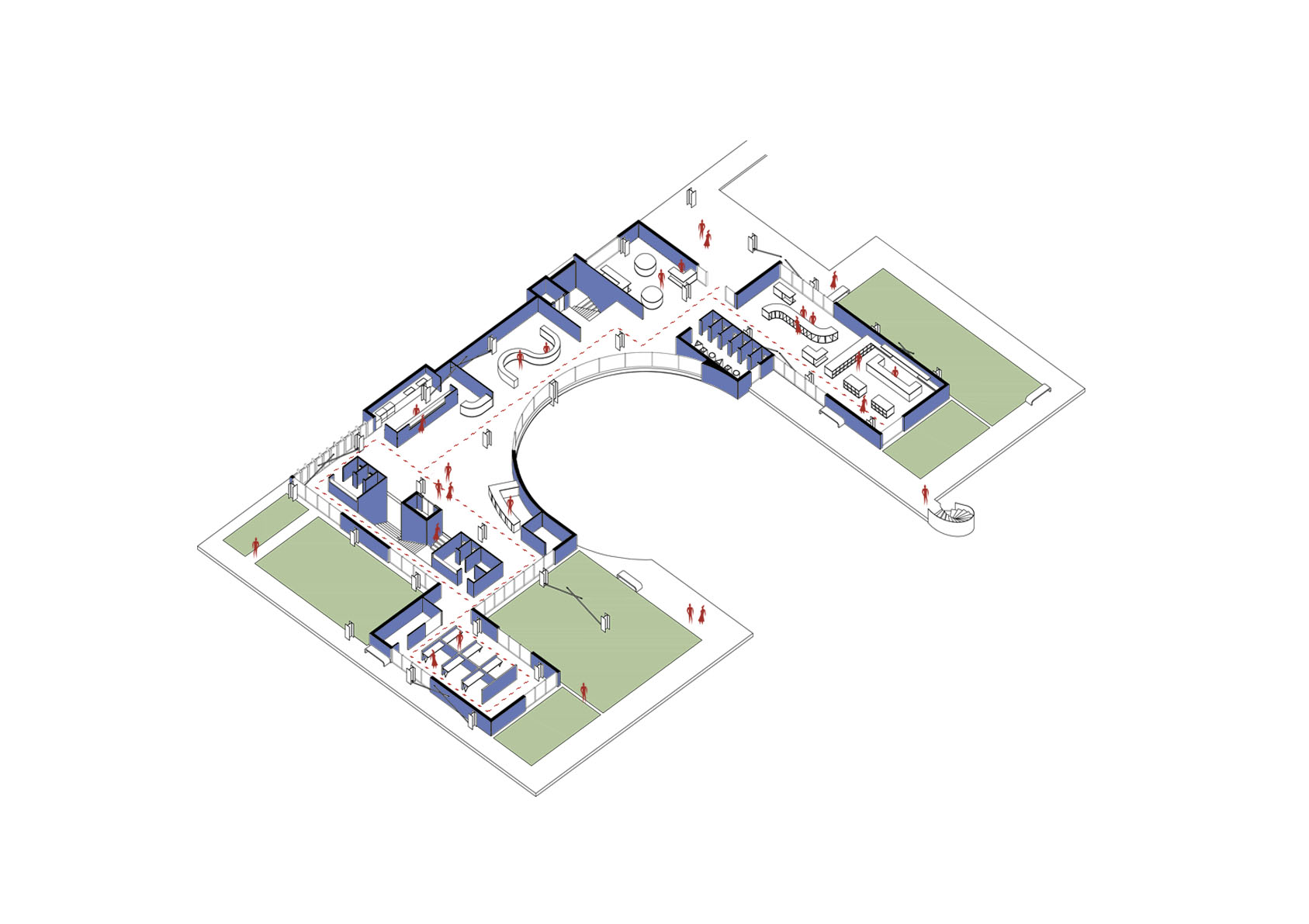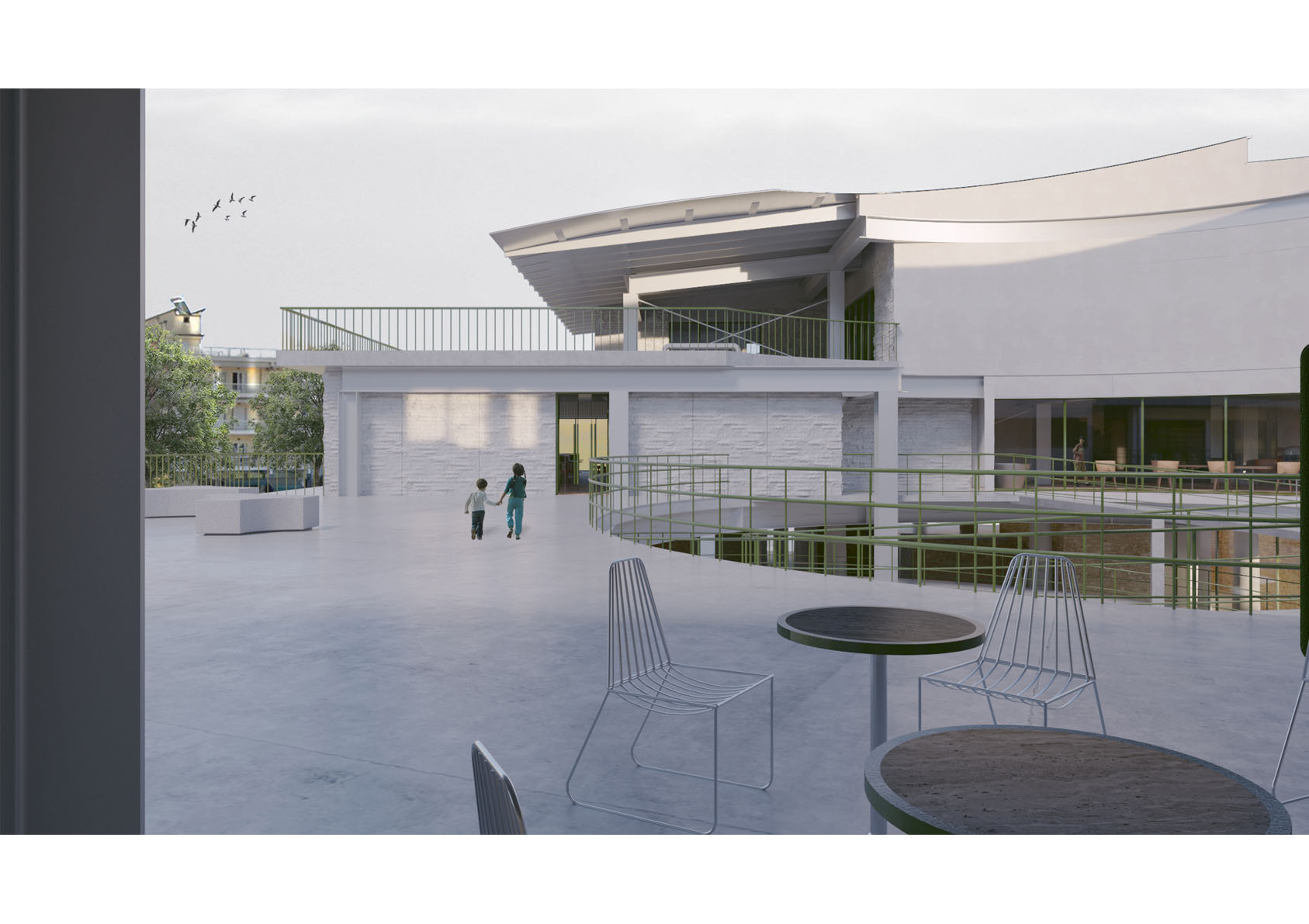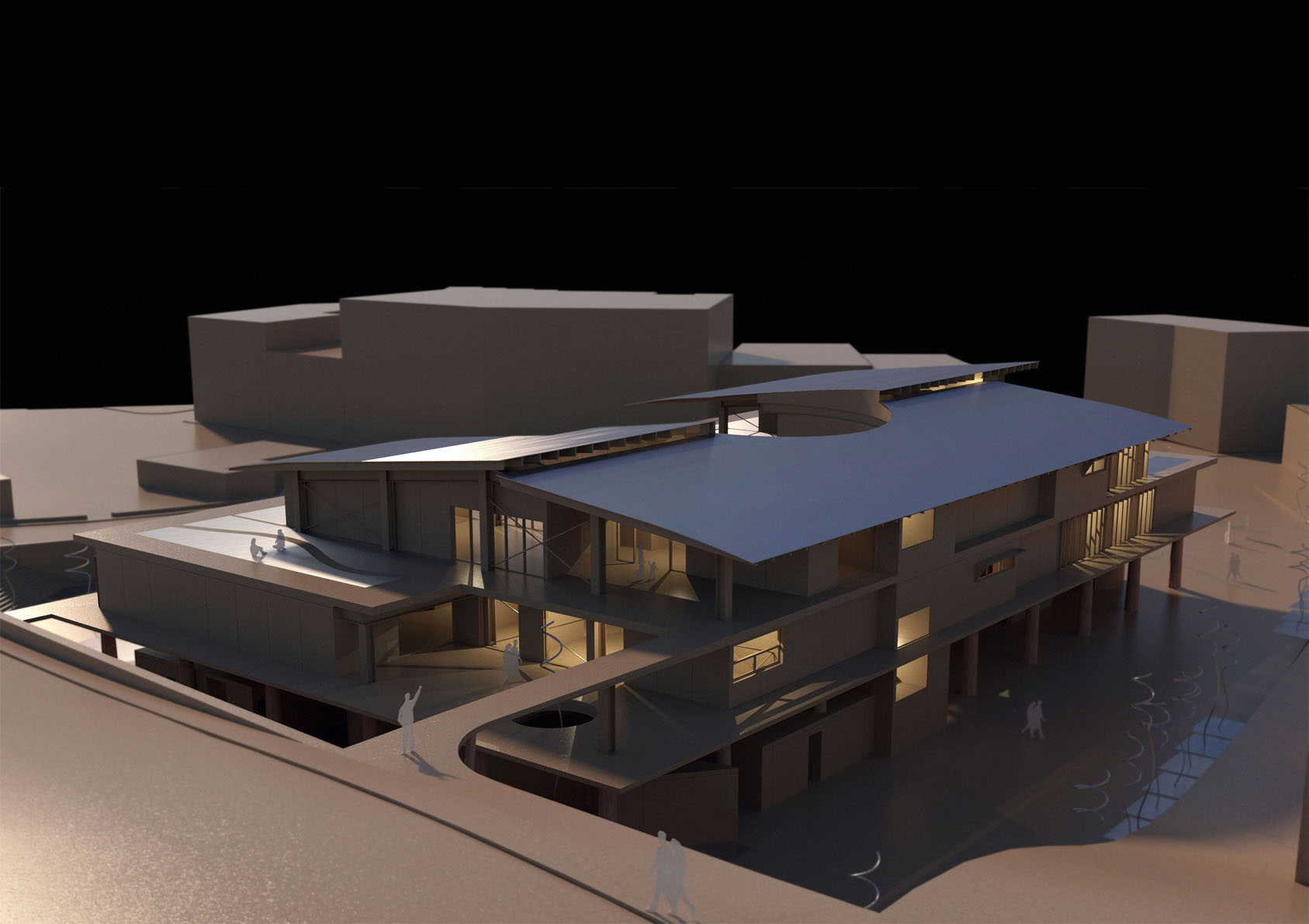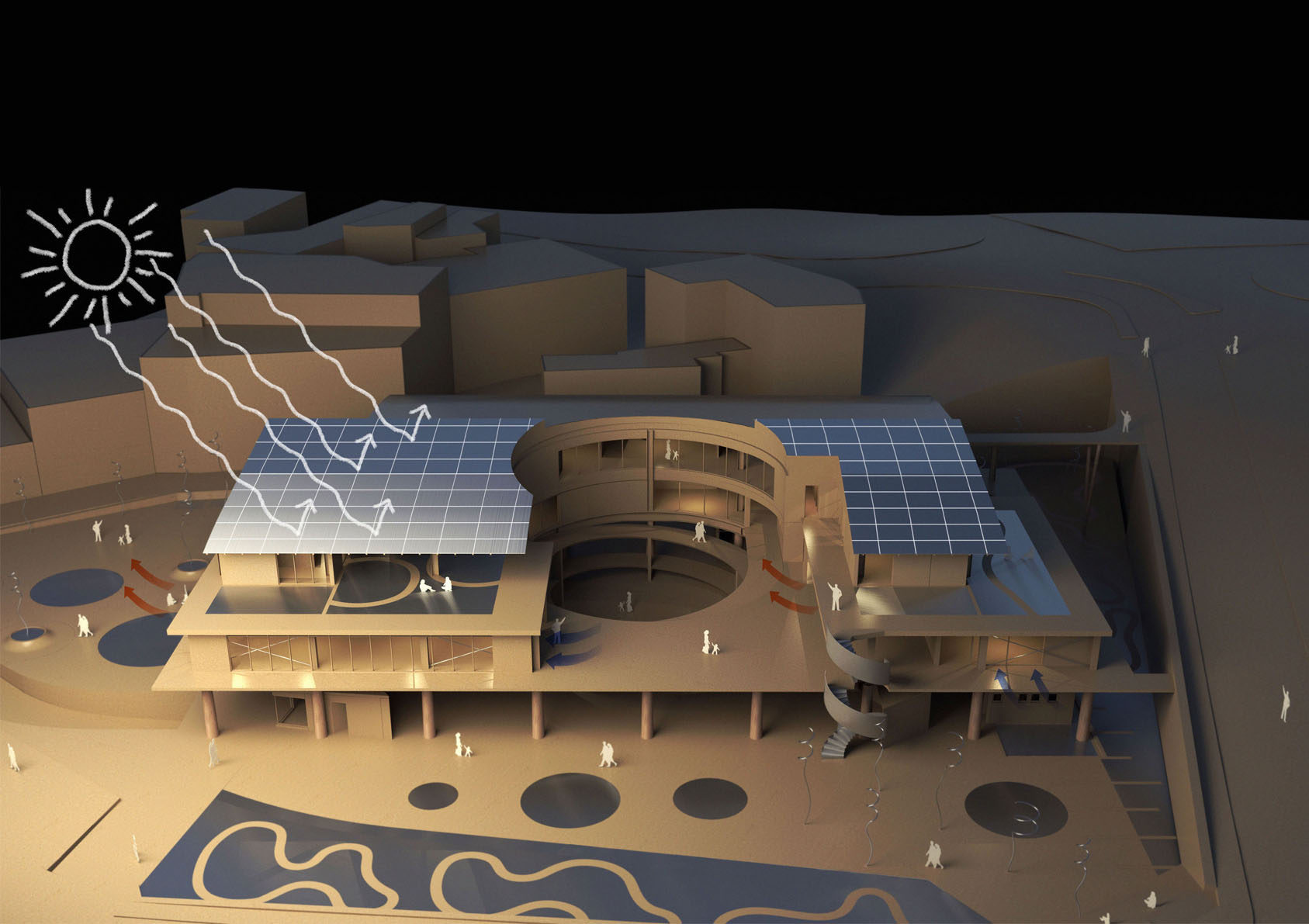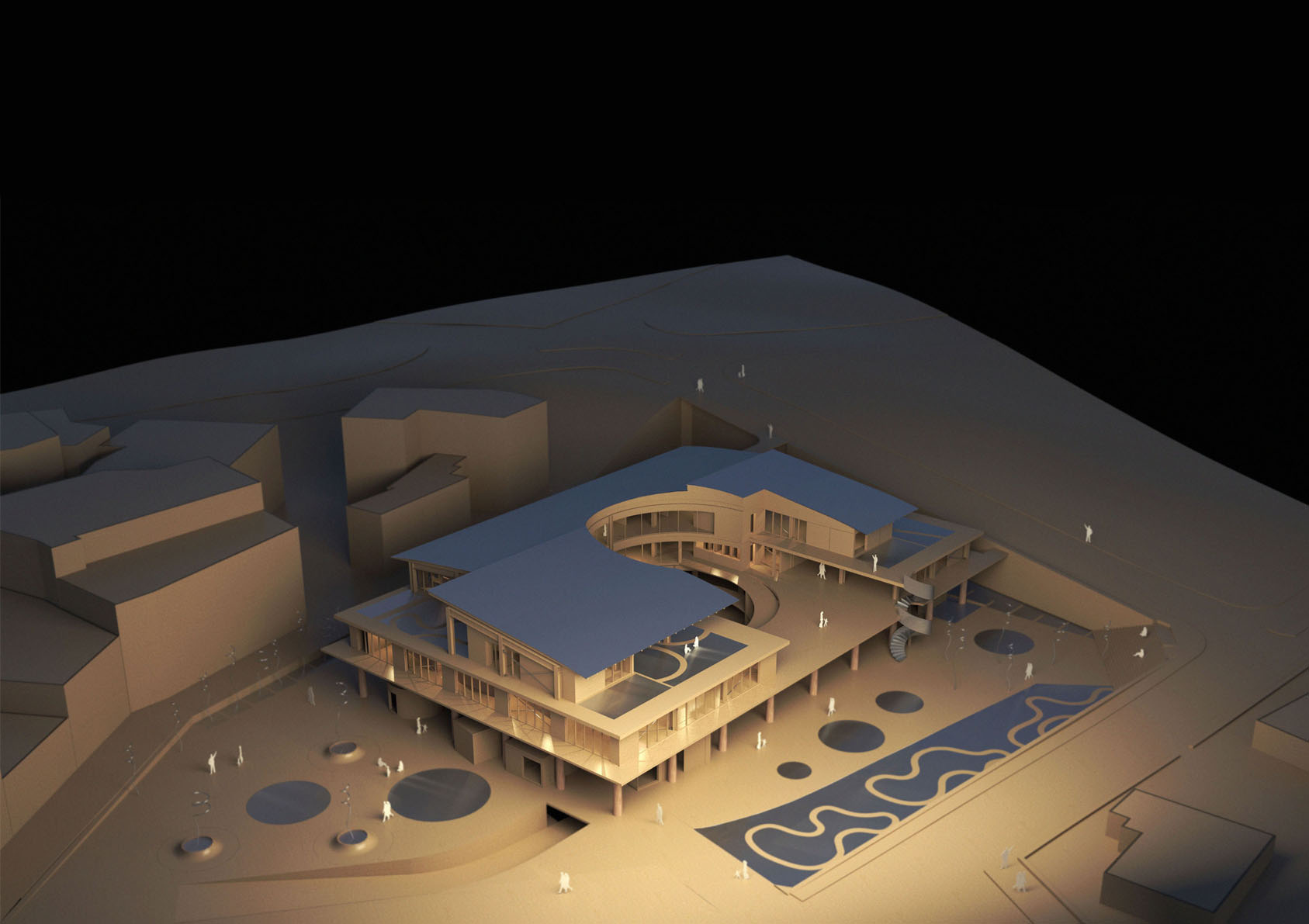
The composition of the design proposal emerged from the synthesis of two fundamental guiding approaches: the creation of a focal point within the urban fabric and the enhancement of urban life. More specifically, the objective was to design a building that would be easily recognizable and accessible to all citizens, located in the city center, while simultaneously creating a green urban “lung” that would provide relief and open space for the surrounding area.
In order to define the compositional principles that guided the design, it was necessary to refer to the theoretical work of the Finnish architect and thinker Juhani Pallasmaa. Through his seminal work The Eyes of the Skin: Architecture and the Senses, one can identify the principles that informed our design approach. In particular, the conclusions of this concise yet influential architectural text highlight the importance of engaging all human senses in order to achieve a complete experiential understanding of built space. Similarly, in our proposal, vision does not function as the dominant means of perceiving architecture. Instead, the tactile qualities of the materials, together with the acoustic atmospheres generated within spaces according to their respective uses, contribute to a holistic spatial experience.
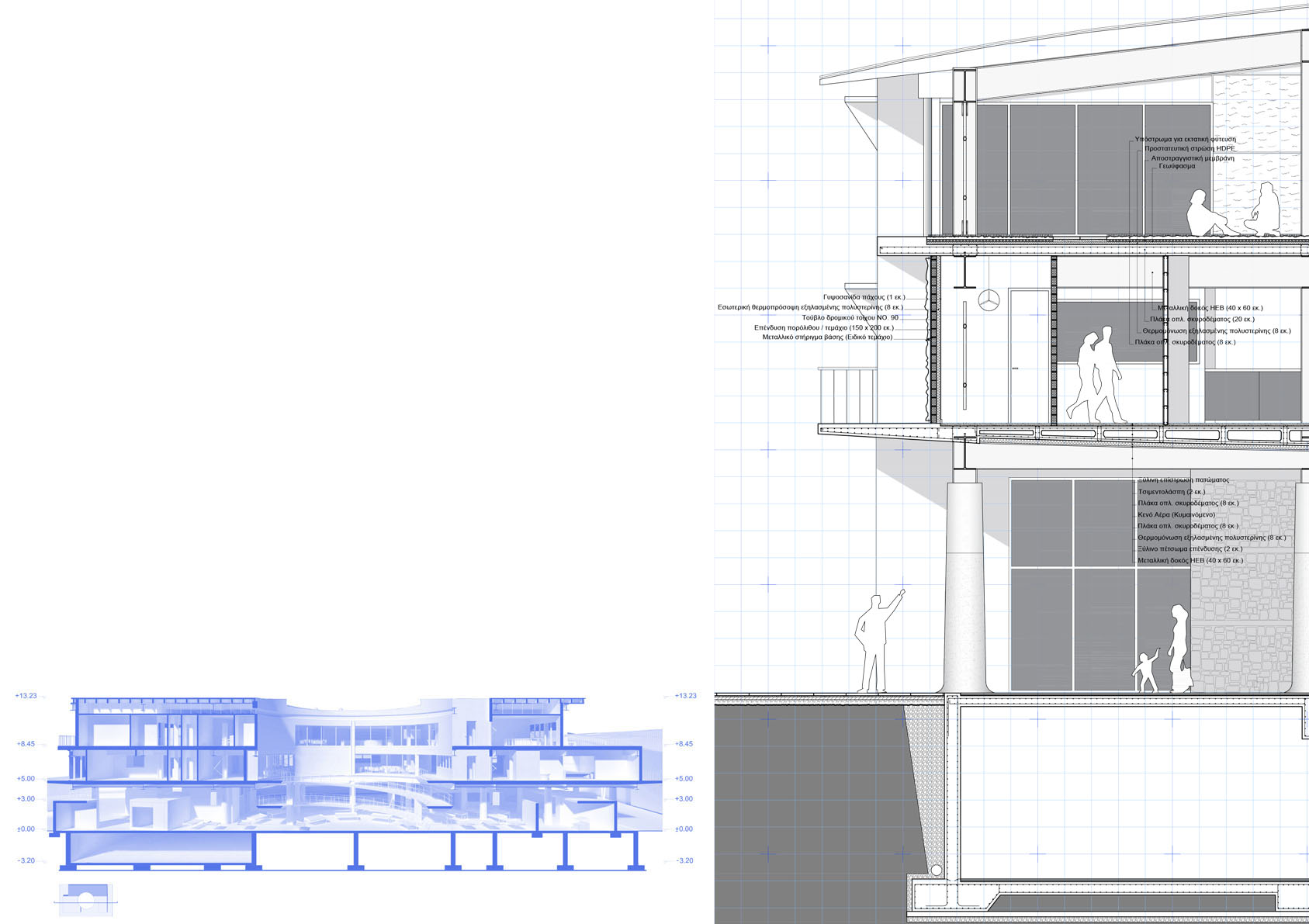
Subsequently, the design direction focused on the integration of traditional architectural features and construction techniques—many of which are gradually disappearing—into a productive dialogue with contemporary architectural language and technology. More specifically, in the ground-floor space of the covered Market, stone sourced from the region of Epirus was employed, while the floor surfaces were paved with different types of stone rather than cast materials. This approach creates a familiar environment that is fully integrated into its landscape, while the use of natural materials also contributes to improved thermal performance. On the upper levels, the remainder of the building program is organized through a lighter metal structural system, allowing for larger openings and increased natural daylight. These levels accommodate commercial, dining, and entertainment spaces arranged in an open-plan layout, facilitating smooth spatial transitions and unobstructed circulation. Circulation is further supported by two large spiral ramps located at the center of the building, which simultaneously enhance natural daylight penetration and vertical ventilation throughout the structure. Finally, the roofing system consists of two mono-pitched roofs, selected in response to the region’s intense rainfall while also allowing for the installation of photovoltaic panels, thus contributing to greater energy autonomy.
The building footprint covers an area of 2,240.66 m², making it fully adequate for the program it is intended to accommodate. Following the principle of minimizing built mass, the design achieves a total built area of 4,143.46 m². This objective was realized through our intention to propose a solution with the lowest possible energy footprint. In combination with the use of natural materials such as stone and porous limestone, as well as the building’s orientation and overall form, the project aims to contribute to the creation of an improved microclimate for the surrounding area.
PROJECT: New Municipal Market of Agia Marina in Ioannina
AREA: Ioannina – Greece
YEAR: 2026
TYPOLOGY: Public Architecture – Ideas Competition
DESIGNER: Dimitris Molonis
STRUCTURAL COSULTANT: Tsolas Engineering
3D RENDERING: Ioannis Retsios